Studio product · Live

InternetAccess.org

An open, channel-neutral marketplace for business connectivity. Post a need once, and the providers that serve the address compete on price, speed, and SLA.

LiveProgrammatic SEO · Marketplace13 services · 3,396 pages
internetaccess.org
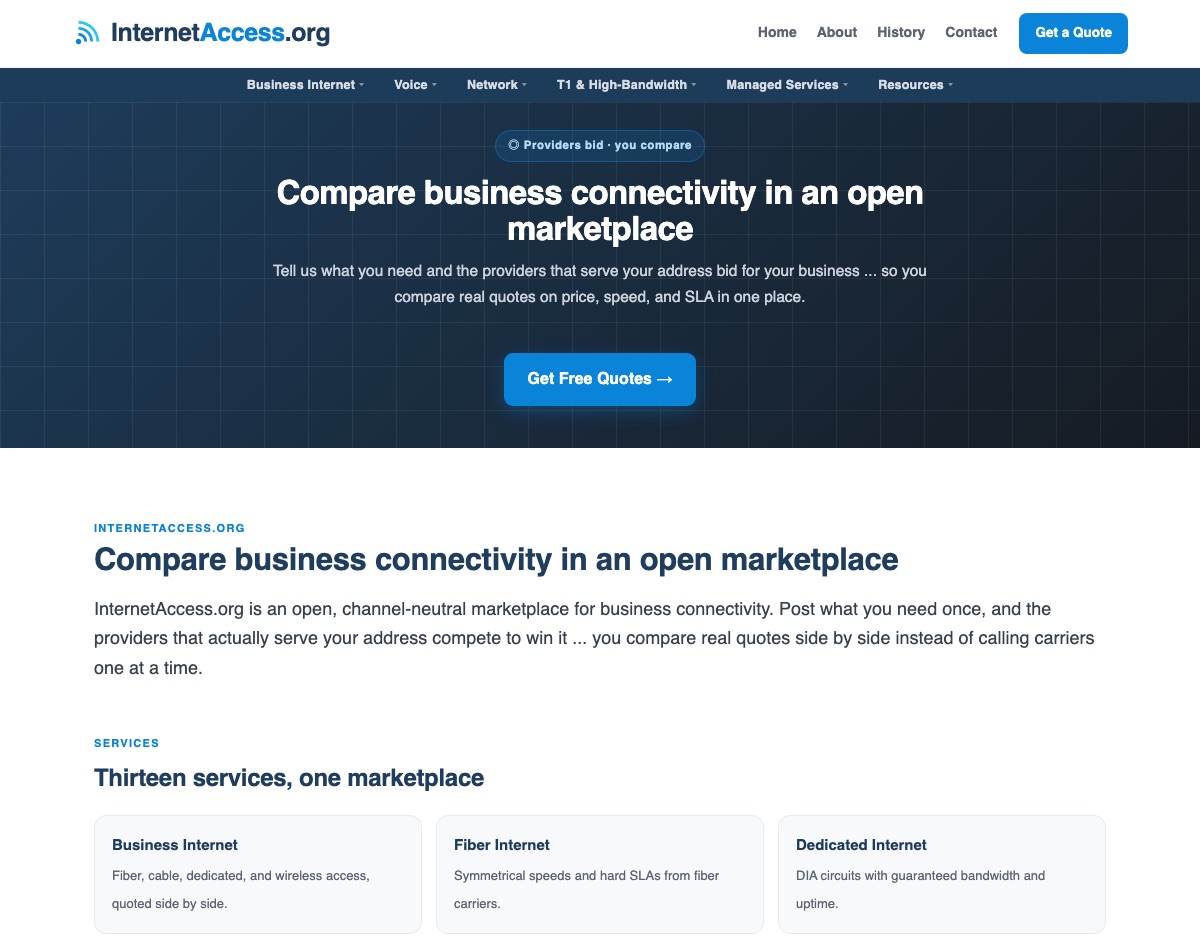
InternetAccess.org homepage: compare business connectivity in an open marketplace
What it is

Post once. Let the providers compete.

Buying business connectivity usually means calling carriers one at a time. InternetAccess.org is built the other way around: a business describes what it needs at one address, and the providers that actually serve that address respond with competing quotes. The buyer compares them side by side and deals directly with the one they pick, free.

It covers 13 services: business internet, fiber, dedicated internet, Ethernet, cable, fixed wireless, SD-WAN, business VoIP, SIP trunking, managed security, T1 and legacy circuits, colocation, and managed hosting.
Visit internetaccess.org

The build

Every service, every state, every major city

3,396 pages, from the live site.

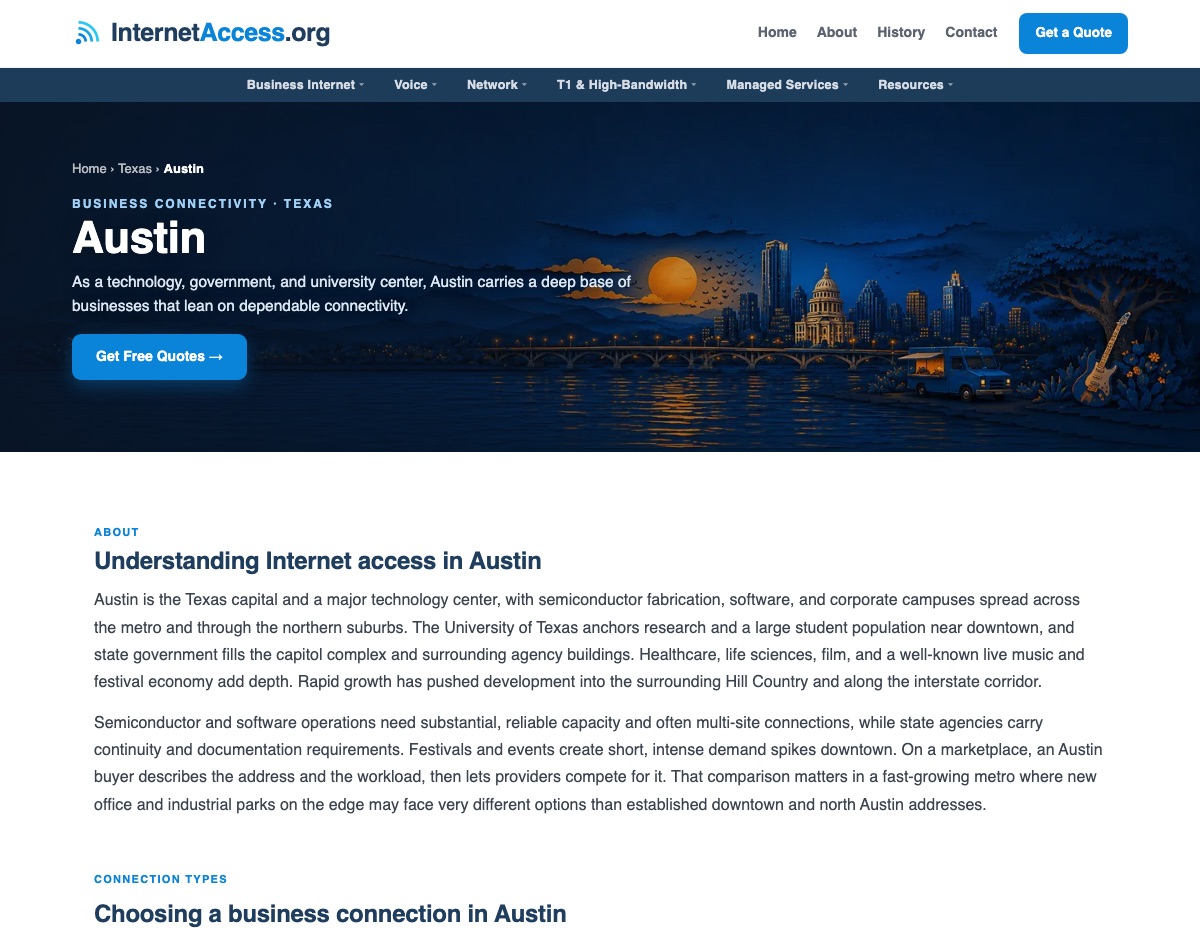
InternetAccess.org Austin city hub with an illustrated hero of Austin landmarks
219 state and city hubs, each with its own illustration
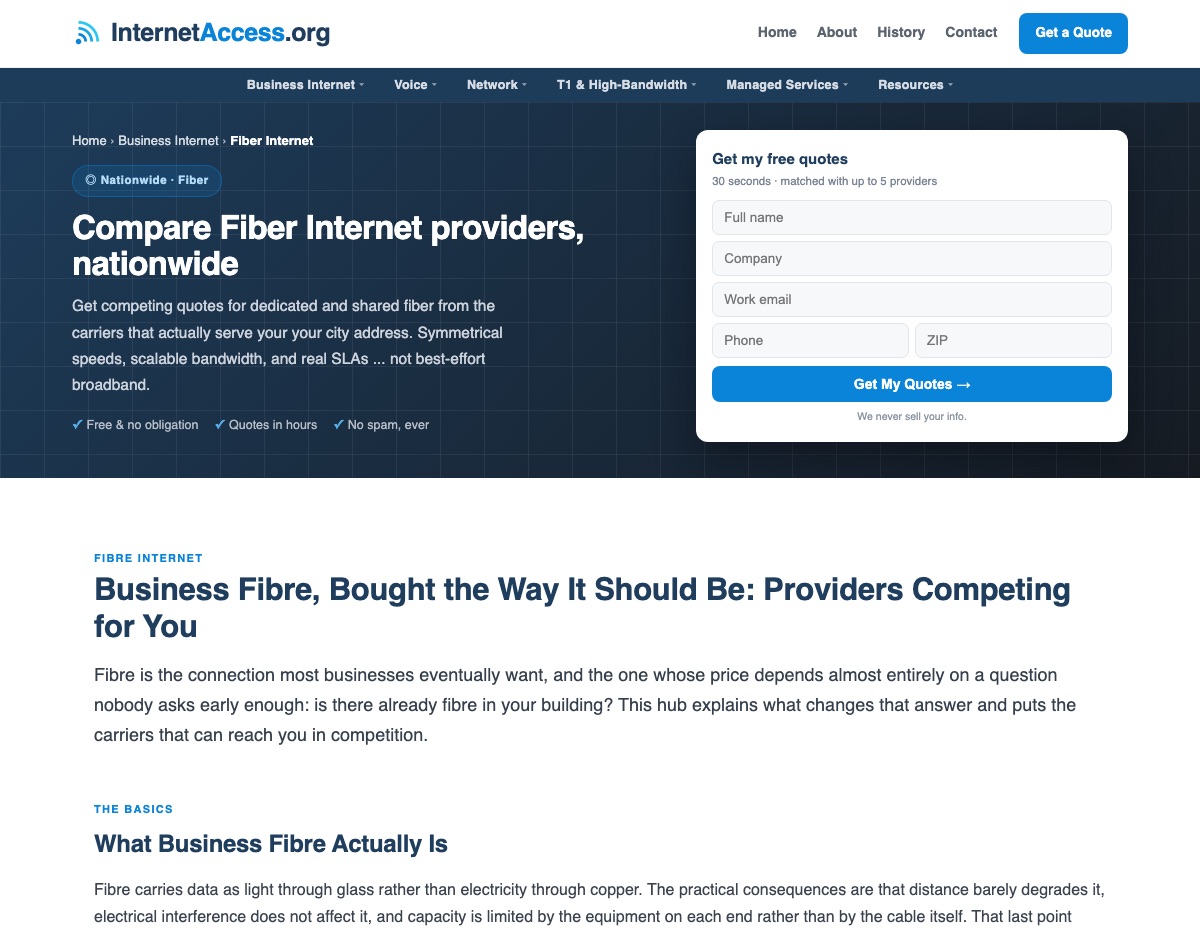
InternetAccess.org fiber internet hub with a quote form
13 service families, each down to state and city pages
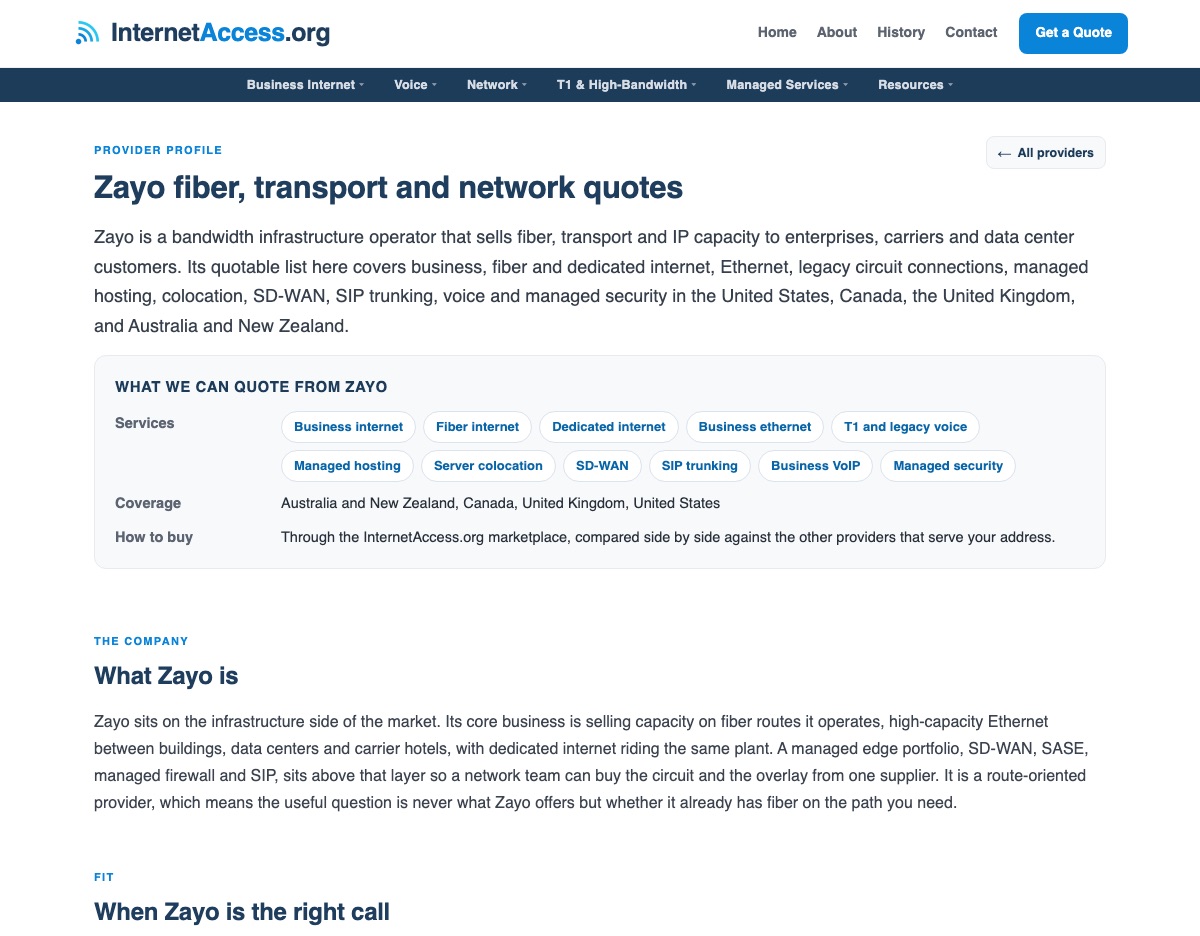
An InternetAccess.org provider profile
63 provider profiles that stick to durable facts
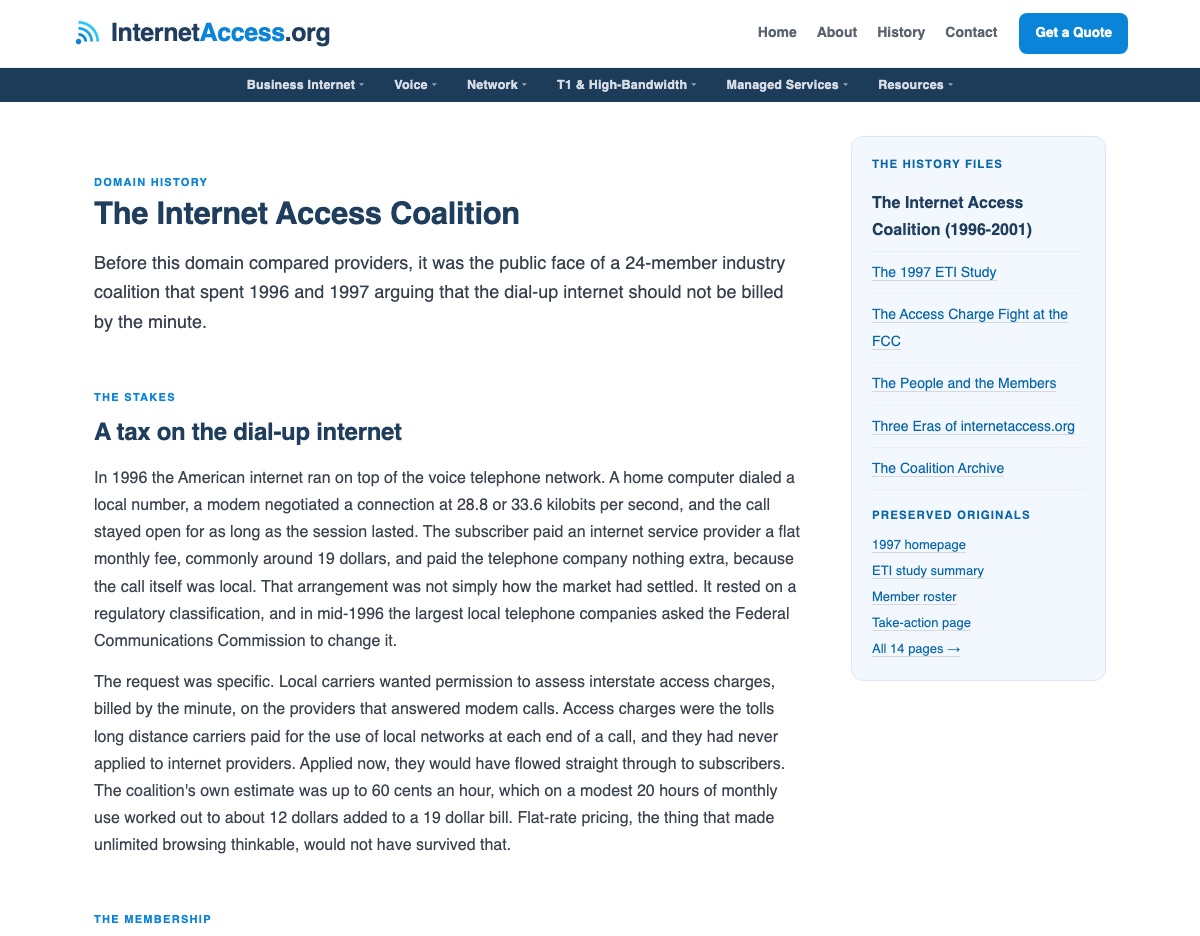
InternetAccess.org history page on the Internet Access Coalition
The domain's own history, told in full
Why this project

A domain with a past

Before this domain compared providers, it was the public face of the Internet Access Coalition: 24 technology companies and trade groups, among them AOL, Apple, IBM, Intel, Microsoft, and Netscape, that spent 1996 and 1997 arguing that dial-up internet should not be billed by the minute. The FCC's tentative exemption for internet providers held, and flat-rate dial-up survived.

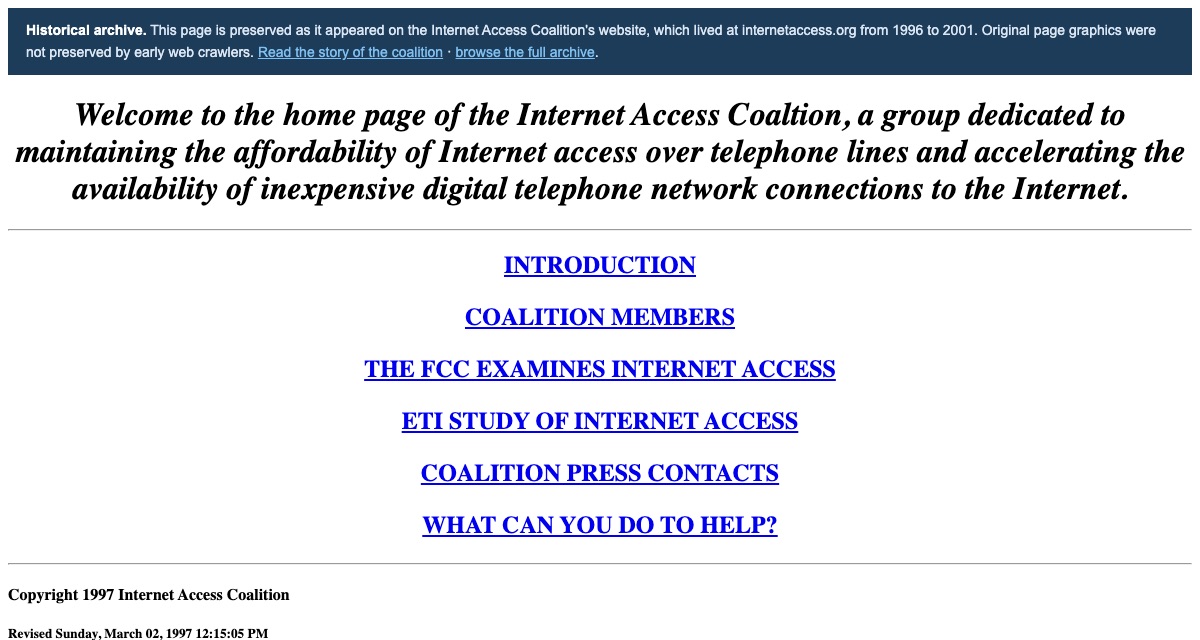
The site keeps that history instead of burying it. The coalition's 1997 pages are back at their original addresses under an archive banner, and the economic study it commissioned is covered in original summaries with attribution, so the policy archives that still cite those pages open something real.

Under the hood it is flat static HTML on a self-hosted server, with FAQ markup on 3,281 pages and city copy assembled from sentence pools, then checked so no two city pages repeat a passage. Same thesis as every directory we run: structure and real data win local queries.

The Internet Access Coalition's 1997 homepage, restored at its original address under an archive banner
The coalition's 1997 homepage, at its original address

Have a market a directory could own?

We build these systems for our own portfolio first. Yours can be next.

Start the conversation